Medical Device Software & SaMD Regulatory Training SOAR®
#Software | #Online | #Agile | #Regulatory
SOAR® Medical Device Training for Modern Software Development
SOAR® Software Online Agile Regulatory training includes 16 on-demand courses totaling 24 hours of content, part of our SOAR® Fundamentals Training program. Our curriculum connects regulatory requirements with real world software development practices by explaining relevant standards, guidance, documentation, and development practices.
Build the Regulatory Skills Medical Device Software Teams Need
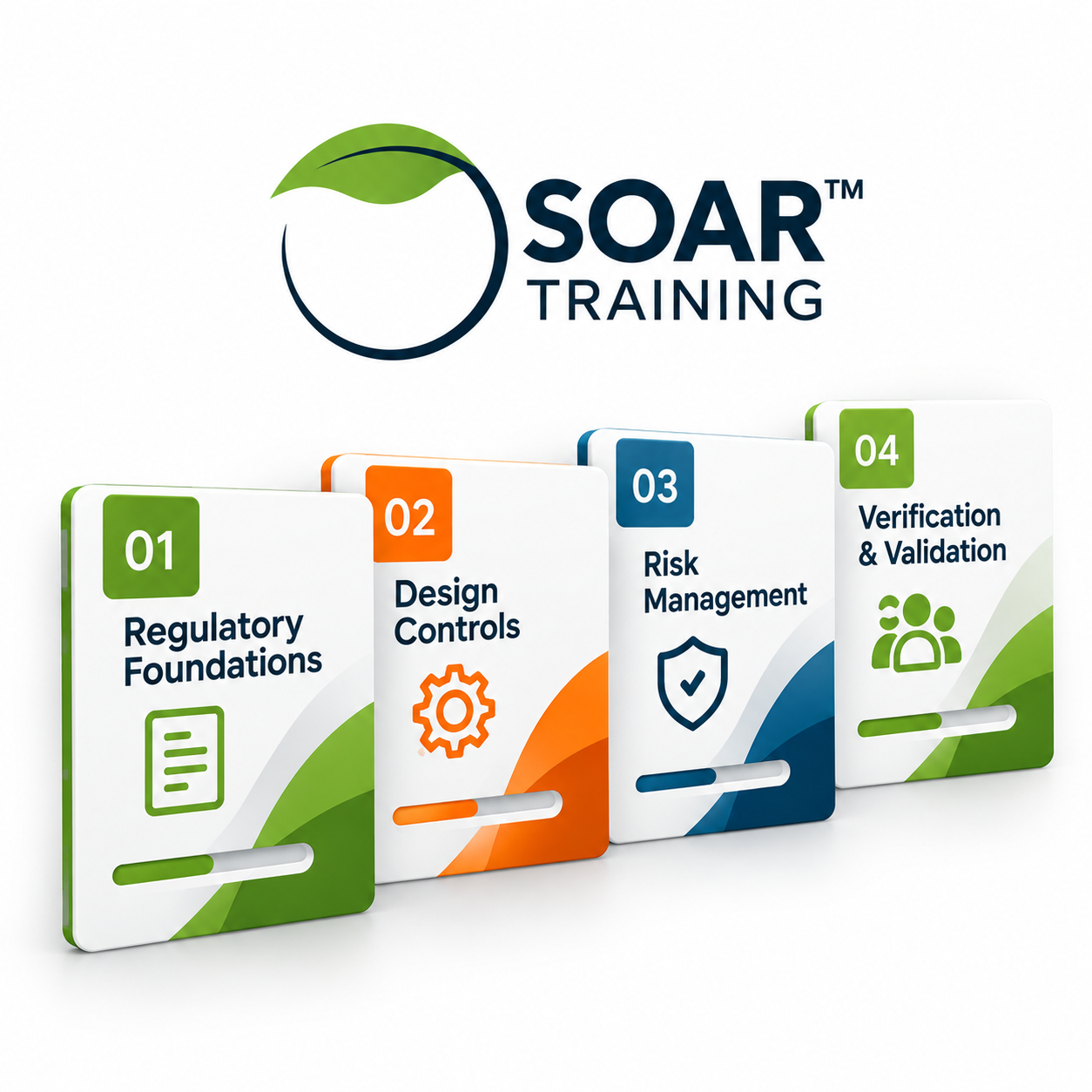
Connecting Agile Development With FDA Requirements
For professionals seeking FDA Training, the courses cover both US FDA and EU medical device regulation, FDA software development guidance, Agile concepts, and established industry standards. The curriculum also addresses Software as a Medical Device, providing practical regulatory training for professionals developing SaMD, SiMD, and other medical device software and working in regulated development environments.
Combine SOAR® training with Software DHF templates and regulatory resources through our DIY Software Regulatory Kit
SOAR® is a 16-course program designed to help Software Engineering, Software Quality, QA and Regulatory teams understand what’s expected throughout medical device software development—from planning and requirements through risk management, cybersecurity, verification, validation and submission readiness.
What Our 16 Course SOAR® Program Covers
Our program progresses through all key areas of medical software development and regulation. The curriculum begins with an overview of US FDA and EU regulation and moves into subjects including IEC 62304, AAMI TIR45, Agile methods, Scaled Agile, followed by software development planning.
Additional standards and guidance covered throughout the program include risk management, cybersecurity, software validation, usability engineering, and software lifecycle processes. Explore the individual SOAR® 90 minute courses to see the topics and regulatory requirements covered in each course.
SOAR® was developed by medical device software and regulatory experts with decades of hands on experience developing, reviewing, and supporting regulated medical device software. The training brings together real world software development practices, FDA regulatory expectations, and recognized industry standards to provide practical guidance teams can apply throughout the product lifecycle.
Choose the Training That's Right for You
Learn From Medical Device Software & Regulatory Experts
Medical Device Software Standards & FDA Guidance Covered
- 21 Code of Federal Regulations – Part 11 Electronic Records; Electronic Signatures
- 21 Code of Federal Regulations – Part 820 Quality System Regulation for Medical Devices and In Vitro Diagnostic Products
- AAMI TIR45:2012 - Guidance on the Use of AGILE Practices in the Development of Medical Device Software
- AAMI/ISO 80002-2:2017 - Medical device software— Part 2: Validation of software for medical device quality systems
- AAMI/ISO TIR24971:2020 - Medical devices — Guidance on the application of ISO 14971
- ANSI/AAMI HE75:2009 (R2018) Human Factors Engineering - Design Of Medical Devices
- FDA Content of Premarket Submissions for Software Contained in Medical Devices
- FDA Design Controls Guidance for Medical Device Manufacturers
- FDA General Principles of Software Validation
- FDA Guidance Applying Human Factors and Usability Engineering to Medical Devices
- FDA Off-The-Shelf Software Use in Medical Devices
- IEC 60601-1 Medical electrical equipment
- IEC 62304 – Medical Device Software – Software Life Cycle Processes
- IEC 62366-1:2015 Medical Devices - Part 1: Application Of Usability Engineering To Medical Devices
- IEC 82304 – Health Software - Part 1: General requirements for product safety
- IEC/TR 80002-1:2009 - Medical device software – Part 1: Guidance on the application of ISO 14971 to medical device software
- IEC/TR 80002-3:2014 - Medical device software -- Part 3: Process reference model of medical device software life cycle processes (IEC 62304)
- IEEE 610.12-1990 - IEEE Standard Glossary of Software Engineering Terminology
- ISO 9001:2015 Quality management systems — Requirements
- ISO 13485:2016 Medical Devices – Quality Management Systems
- ISO 14971:2019 - Medical devices – Application of risk management to medical devices
- ISO/IEC/IEEE 29148-2018 - Systems and software engineering -- Life cycle processes -- Requirements engineering
- REGULATION (EU) 2017/745 – Medical Device Regulation
- REGULATION (EU) 2017/746 – In Vitro Diagnostic Regulation
Understanding FDA Software Medical Device Regulations, Guidance, and Recognized Consensus Standards
SOAR® covers key FDA software medical device regulations, guidance, and recognized consensus standards relevant to medical device software development, including 21 CFR Part 820, ISO 13485, IEC 62304, ISO 14971, IEC 62366, and AAMI TIR45. The curriculum connects these requirements and standards to real world software development, including quality management, software lifecycle processes, risk management, usability, and Agile development practices.
SOAR® helps teams understand not only what is required, but how to apply it throughout the medical device software development lifecycle.
From Regulatory Learning to SOAR® Certificate of Completion
SOAR® training can also support an organization’s personnel training and competency activities within its Quality Management System (QMS), including training established to meet applicable requirements under ISO 13485 and FDA 21 CFR Part 820. Course completion certificates provide documentation that organizations can retain as part of their training records.
A SOAR® Certificate of Completion reflects training across FDA software medical device regulations and guidance, recognized consensus standards, and modern Agile medical device software development practices.
Through Grassroots Dx, we aim to make complex regulatory subjects more approachable for today’s medical software professionals. By building familiarity with the regulations, guidance, recognized consensus standards, and Agile practices that support medical software compliance, learners can approach development decisions, regulatory documentation, and submission preparation with stronger regulatory knowledge.
Start SOAR® training today and build the regulatory knowledge your team needs to develop medical device software with greater confidence.
Frequently asked questions
Who should take SOAR®?
SOAR® Software Online Agile Regulatory training is designed for today’s medical software engineers, quality and regulatory professionals seeking medical device software training that connects Agile development with applicable software medical device regulations, standards, and guidance.
How is SOAR® structured?
SOAR® provides 24 hours of on-demand educational content organized into 16 courses of 90 minutes each, covering regulatory and software development subjects.
Courses can be completed in sequence with the software development lifecycle, as a full series, ad hoc as specific training needs arise, or individually by topic. Learners can also revisit courses multiple times throughout their subscription period as a training and reference resource.
Does SOAR® address FDA requirements?
Yes. The FDA training content addresses relevant software medical device regulations, guidance, and recognized consensus standards, including 21 CFR Part 820, alongside applicable industry standards such as IEC 62304.
Does SOAR® cover SaMD?
Yes. The curriculum specifically addresses FDA SaMD guidance, including guidance applicable to Software as a Medical Device (SaMD) as part of its broader regulatory education, making the content relevant to professionals in need of SaMD compliance training.
What certification is provided?
Learners receive a Certificate of Completion for each course. After completing all 16 courses, learners receive a SOAR® Certificate of Completion for the full program.
Is IEC 62304 covered?
Yes. The curriculum addresses IEC 62304, including its scope, structure, requirements, and relationship with Agile medical software development practices.
Can SOAR® training support regulatory compliance?
Yes. SOAR® training can support medical software compliance and an organization’s QMS training requirements by providing structured education on applicable FDA medical device software regulations and guidance, recognized consensus standards, and software development practices.
Course completion certificates can also be maintained as training records within the organization’s QMS. Organizations remain responsible for determining and meeting the specific regulatory requirements applicable to their products and quality system.